Day 4 Without Power: What the 4Patriots 2200X Actually Does When a Hurricane Knocks Out Your Block
Most reviews compare spec sheets. We wanted to know one thing: if the grid is down for a week in August, does this thing actually keep a family's food, medicine, and sanity intact? Here's what the numbers say.
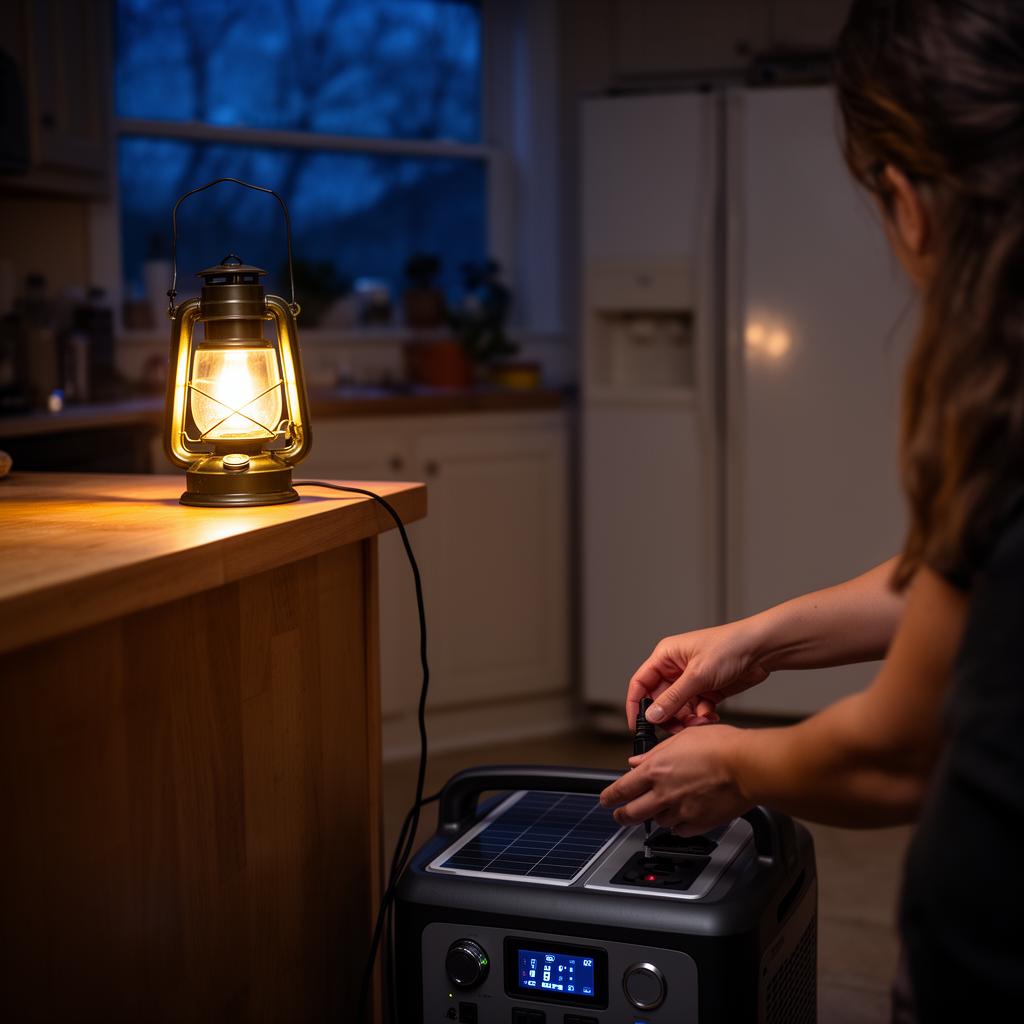
Bundled solar panel + payment-plan offer running through the holiday window. See current offer →
The scenario: a week without grid power
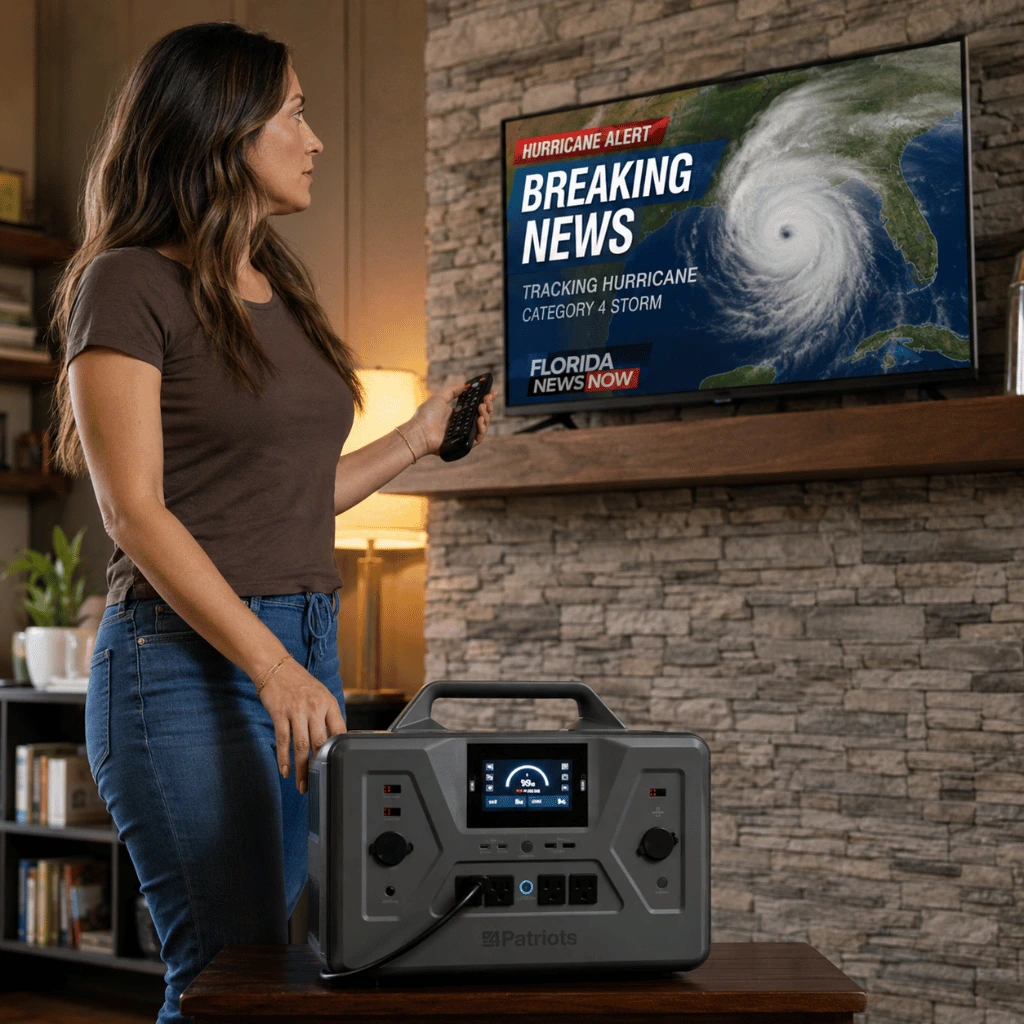
A Category 3 hurricane crosses the coast at 2 a.m. By dawn, the eyewall has passed, the rain is still horizontal, and the lights are out across three counties. Your local utility puts restoration estimates at five to nine days. It's late August. The high today is 94.
In the fridge: a week of groceries, a row of insulin pens, and the leftovers from Sunday dinner. In the bedroom: a CPAP machine your father can't sleep without. In the hallway: a box fan, because the house starts to feel like an attic by mid-afternoon. None of these things are dramatic on their own. Together, they're the actual stakes of a multi-day outage — quietly serious, and unevenly distributed across the people in the house.
The reason we keep coming back to the Patriot Power 2200X is that this is exactly the situation it's built for. Not a five-minute brownout. Not a weekend off-grid trip. A real, sustained, summer-in-the-South kind of outage where the question stops being "do I have power?" and becomes "what do I want to keep powered, and for how long?"
What the 2200X actually is (and isn't)
In plain language: the 2200X is a lithium battery station with a built-in inverter. It stores electricity in a battery pack and converts it to standard household AC through a clean, pure sine-wave inverter — the same kind of power that comes out of your wall.
It is not a fuel generator. There is no gasoline, no propane, no exhaust, no roar. That means you can run it indoors, on the kitchen floor, next to the people who actually need the power — which during a hurricane, when the wind is throwing tree branches across your yard, matters a lot.
The specs, plainly:
- 2,240 Wh usable capacity (base unit)
- 2,200 W continuous output / 4,400 W surge
- Expandable to 6,720 Wh with two add-on battery packs
- 57 lbs, with recessed handles and wheels on the larger bundle
- Pure sine wave output (safe for sensitive electronics and medical devices)
- AC, USB-A, USB-C PD, 12V DC, and solar input — including DualForce simultaneous AC + solar recharge
Hour-by-hour: what it actually powers
Spec tables are useful for engineers and useless for everyone else. Here's what the 2200X looks like in the rhythm of an actual outage.
Hours 0–24: lights, fridge, phones
A standard Energy Star refrigerator pulls roughly 100–150 W when its compressor is running, but it only runs maybe a third of the time. Call it an average of 40–50 W over a full day, or around 1.0–1.2 kWh per 24 hours. On the 2200X, that's about half the battery, leaving plenty of headroom for charging two phones, a Wi-Fi router, a couple of LED lamps, and a box fan running on low. You finish day one with battery to spare.
Hours 24–72: medical devices and a working laptop
A modern CPAP without the humidifier draws about 30–60 W — somewhere in the neighborhood of 0.3–0.5 kWh for an eight-hour night. Add a laptop work session, the fridge cycling on and off, and the same baseline of phones and lights, and a fully topped-up 2200X gets you cleanly through day two and most of day three.
Day 3 and beyond: where solar starts mattering
By the morning of day three, you are no longer asking "how long does the battery last?" You're asking "can I refill it faster than I drain it?" That's where the solar story (next section) becomes the actual story. Without recharge, the 2200X is a roughly 60-to-72-hour bridge for a careful household. With even modest solar input, that bridge extends indefinitely.
What it can't do — the honest limits
We are going to be direct here, because pretending otherwise just leads to disappointed buyers.
- It will not run central air. A 3-ton central AC pulls 3,500+ watts continuous. Not even close.
- It will not run an electric water heater or a well pump. Those are 240V circuits the unit isn't designed for.
- Microwaves, hair dryers, and space heaters work — briefly. A 1,500 W microwave run for two minutes is fine. A 1,500 W space heater run all night will empty the battery in roughly an hour and a half.
- It is a battery, not a whole-home generator. If your goal is keeping the entire house running like nothing happened, you want a fuel generator with a transfer switch, not this.
The right mental model is: the 2200X keeps the essentials running for days. It doesn't keep the house running. That distinction matters, and getting it right up front is the difference between a happy buyer and a frustrated one.
Solar recharge: does it keep pace?
Here's something most reviewers gloss over: post-hurricane skies are often clear and brutally hot. That's actually ideal solar weather. The same sun that's making your house unbearable is also, conveniently, refilling your battery.
The included 200 W foldable panel under good summer conditions will pull in roughly 1.0–1.4 kWh per day in real-world use — enough to fully replace the daily fridge + lights + phones load with a little left over. Add a second or third panel and you cross over into "running everything you actually need indefinitely" territory.
The DualForce feature — simultaneous AC and solar recharge — matters less during an outage (no AC available) and more before one: when a storm watch goes up, you can top off from the wall while the panels finish the job, hitting full charge in roughly 90 minutes per the manufacturer's spec.
Caveat: solar output drops fast under cloud cover, and panel angle matters more than people expect. Plan for 60–70% of nameplate output as a realistic average, not 100%.
Setup: what it's actually like on day one
The 2200X arrives in a single large box. Inside: the unit itself, the 200 W solar panel (in the bundle), AC and solar charging cables, a car charging cable, and a printed quick-start guide. There is no app to install, no account to create, no firmware update on first boot. You plug it in, watch the front display count up to full charge, and you're done.
The control panel is unfussy: a clear LCD readout of battery percentage, input wattage, and output wattage, with physical buttons for the AC, DC, and USB sections. Each output bank has its own on/off so you're not wasting standby draw on outputs you aren't using — a small detail that adds up over a long outage.
If you'd rather see this walked through on video, 4Patriots' own setup walkthrough is the clearest one available; their documentation here is genuinely better than most.
Who this is built for — and who should look elsewhere
Built for
- Homeowners in hurricane- or severe-weather-prone regions who want multi-day fridge and medical-device coverage
- Households who specifically want fume-free, indoor-safe backup power (a real factor with kids, pets, or elderly relatives)
- Buyers who value U.S.-based customer support during an actual emergency, not just at purchase
Look elsewhere if
- You need to run central AC or other major 240V appliances — get a fuel generator and a transfer switch
- You need more continuous wattage for things like a washing machine or water pump — see the 2500X section below
- You want the absolute lowest cost per watt-hour and don't care about brand or support tradeoffs — look at Jackery or EcoFlow
- You need something light enough to carry on a hike — this is a home unit, not a backpack unit
Price and what you're actually paying for
The honest critique of 4Patriots is real: per watt-hour, the 2200X is priced at a premium versus the bare-spec leaders. If you build a spreadsheet that compares only capacity-per-dollar, it loses. So why does anyone buy it?
Three reasons that don't show up on the spec sheet:
- U.S.-based phone support. When your power is out and you can't get the unit to recognize the panel, calling a Nashville call center and getting a human in under five minutes is worth real money.
- UPS pass-through. The 2200X can sit between the wall and a sensitive device and switch over to battery in milliseconds when the grid drops — so your desktop, your modem, or a medical device never blinks.
- Multi-year warranty and a flexible payment plan. Both lower the barrier for buyers who don't want to drop the full amount in one go.
That's the actual trade. If those things don't matter to you, the price premium isn't justified. If they do, it is.
When the 2200X isn't enough: the Patriot Power 2500X
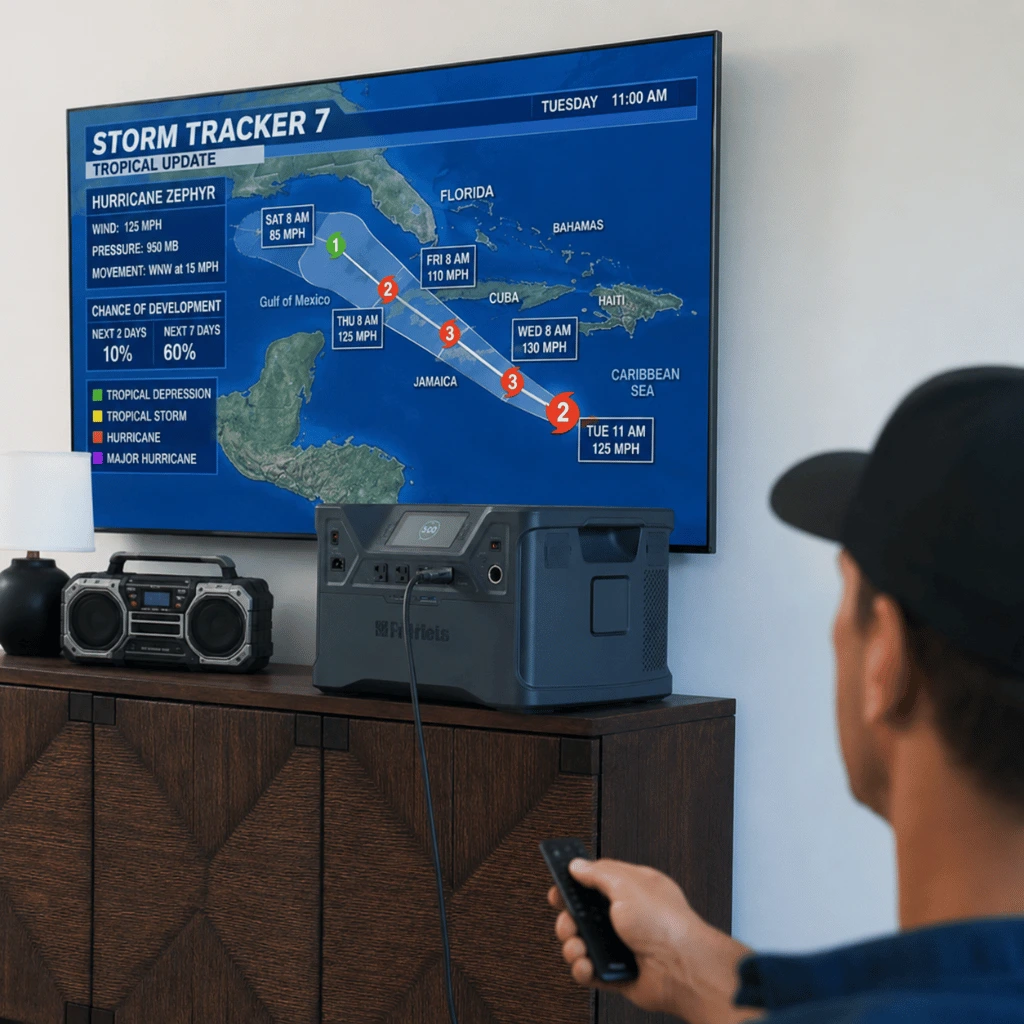
Everything above assumes the 2200X's 2,200 continuous watts covers what you need. For most households managing a fridge, medical devices, and basic comfort through an outage, it does. But some households need more headroom — a second refrigerator, a sump pump, a washing machine mid-outage, or simply more days of runtime without relying on sun. That's where 4Patriots' larger model, the Patriot Power 2500X, comes in.
We're including it here rather than writing a separate review because the decision between these two units isn't really "which one is better" — it's "how much do you actually need." A side-by-side makes that decision faster than two separate pages ever could.
What the 2500X adds
The 2500X is 4Patriots' newer, larger model, built for households that want meaningful headroom beyond fridge-and-medical-device coverage:
- 2,500 W continuous / 5,000 W peak — enough additional headroom to run a washing machine, a water pump, a small RV air conditioner, or a dishwasher in short bursts, in addition to everything the 2200X already covers
- 1,612 Wh base capacity, expandable to 6,988 Wh with up to four add-on battery packs — the largest expansion ceiling in the Patriot Power lineup, meaningfully bigger than the 2200X's two-pack, 6,720 Wh maximum
- 3,500+ life cycles (LiFePO4), rated for roughly 9.5 years of daily use
- Recharges to full in about 90 minutes on AC, or as fast as 3 hours using four solar panels in good sun
- 65 lbs — heavier than the 2200X, and positioned by 4Patriots as a stationary home-backup unit rather than a frequently-relocated one
In real terms: a full charge runs a refrigerator for roughly 13 hours continuous (about 54 hours cycling), a CPAP machine for about 32 hours, and a chest freezer for about 8 hours continuous (around 202 hours cycling) — all somewhat longer than the 2200X on the same load, on top of the extra wattage headroom for larger appliances.
2200X vs. 2500X at a glance
| Feature | 2200X | 2500X |
|---|---|---|
| Continuous output | 2,200 W | 2,500 W |
| Peak / surge | 4,400 W | 5,000 W |
| Base capacity | 2,240 Wh | 1,612 Wh |
| Max expanded capacity | 6,720 Wh (2 packs) | 6,988 Wh (4 packs) |
| Recharge time (AC) | ~90 min to 80% | ~90 min to full |
| Weight | 57 lbs | 65 lbs |
| Best for | Fridge, medical devices, lights, phones through a multi-day outage | All of the above, plus a washing machine, water pump, small RV A/C, or dishwasher in short bursts |
Specifications sourced from 4Patriots product documentation as of June 2026. Verify current specs and pricing at 4patriots.com before purchasing.
Who actually needs the upgrade
The 2500X is worth the added cost and weight if any of these describe your household: you're running two refrigeration appliances during an outage (a kitchen fridge and a garage chest freezer, for example), you live somewhere outages commonly run past a week, or you want the option — even occasionally — to run a washing machine, a sump pump, or a small window A/C unit during an extended outage rather than going without.
If your needs stop at a fridge, a CPAP machine, lights, and charging devices, the 2200X already covers that, at a lower price and lighter weight. Most households fall into this group, which is why the 2200X remains our primary recommendation above — but it's worth knowing what the next size up actually buys you before you decide.
See Current 2500X Pricing & AvailabilityVerdict
The 2200X isn't trying to be the cheapest battery on the market, and it isn't trying to be a generator. It's trying to be the box you can put on the kitchen floor before a storm watch goes up and not think about again until the lights go out — at which point it just works, indoors, quietly, for days. By that measure, it does the job.
FAQ
How long will the 2200X run a refrigerator during a hurricane-length outage?
A typical Energy Star fridge averages around 1.0–1.2 kWh per day, so a fully charged 2200X will run one for roughly 40–50 hours on battery alone. With even a single 200 W solar panel and clear post-storm skies, you can hold a fridge running indefinitely.
Can the 2200X handle a CPAP machine for multiple nights?
Yes. A CPAP without the humidifier draws roughly 30–60 W and uses 0.3–0.5 kWh per eight-hour night. The 2200X has enough capacity for roughly 4–6 nights of CPAP-only use, and substantially longer if you're solar-recharging during the day.
Is it safe to run inside during a storm, or does it need to be outside?
Safe indoors. The 2200X has no combustion, no exhaust, and no carbon monoxide risk. That's the single biggest practical advantage over a gas generator during a hurricane, when running anything outside is dangerous or impossible.
What happens if it rains while I'm trying to solar-recharge?
Solar input drops to near-zero under heavy overcast. The panels themselves are weather-resistant but not designed to sit out in driving rain. The practical answer: solar recharge is a post-storm activity, not a during-storm one. Charge fully before the storm hits, ride out the storm on battery, and start recharging once the front passes.
How does it compare to just buying a gas generator for hurricane season?
Different tools. A gas generator can power more, including window AC units, but requires fuel storage, outdoor placement, and constant attention — and is useless once your fuel runs out (and gas stations need power too). The 2200X powers less, but powers it cleanly, indoors, and refills itself from the sky. Many serious preppers run both.
Should I get the 2200X or the 2500X?
For most households, the 2200X is the better fit — it covers a fridge, medical devices, lights, and phones through a multi-day outage at a lower price and lighter weight. Step up to the 2500X if you're running two refrigeration appliances, want the option to run a washing machine or small window A/C during an extended outage, or want the largest available expansion ceiling for future battery packs.
Can the 2500X run a washing machine or window air conditioner?
In short bursts, yes — the 2500X's 2,500W continuous output covers a washing machine, a water pump, or a small RV-style air conditioner, though not a full-size central AC unit. These aren't loads you'd run continuously for days, but having the headroom for occasional use is the main practical difference from the 2200X.
Disclaimer: Educational information based on publicly available specifications. Clean Power Backup is not affiliated with or endorsed by 4Patriots. Specifications and pricing are subject to change. Links to retailers may be affiliate links; we may earn a commission on qualifying purchases at no additional cost to you.